

Car Battery Testing in Buford, GA After a Long, Hot Summer
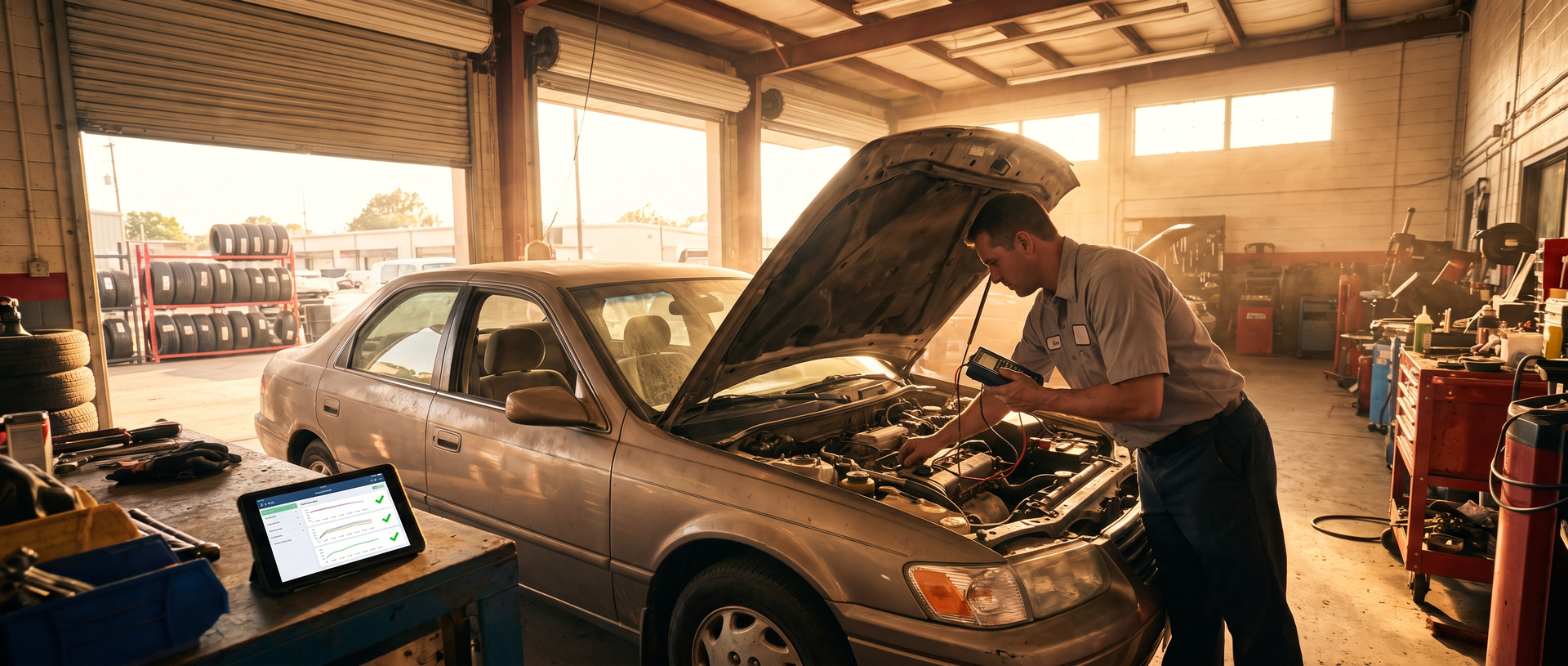
Car battery testing matters most right after a Georgia summer, and Buford drivers are starting to notice it. Weeks of triple-digit pavement heat quietly wear down battery capacity long before the first cold morning reveals the damage.
If your engine has felt a little slower to start, or you're simply not sure how much summer heat took out of your battery, this guide walks through what testing actually reveals and what to do next.
Which Kind of Battery Driver Are You This Fall?
Every driver coming out of a Georgia summer falls into one of three groups, and knowing yours changes what you should do next.
The Survivor starts the car every morning without a hitch and assumes everything is fine. Summer heat breaks down battery plates internally, though, often well before any symptom shows up outside.
The Silent Fader notices small things: a slower crank, dimmer dash lights at idle, power windows that feel sluggish. These are early warning signs, not random glitches.
The Question Mark simply doesn't know the battery's age or history, maybe because the car is newly purchased or handed down from a family member. Testing removes the guesswork before winter does it for you.
Wherever you land, a proper inspection through our service department gives you a clear answer instead of a guess, and Cumming and Suwanee drivers run into these same three patterns every fall.
Matching Your Battery Situation to the Right Service
Not every battery concern calls for the same fix, and guessing usually costs more than testing does. A short load test tells us whether your battery is holding up, fading, or already past the point of reliable use.
| If You're This Buyer | Consider This | Why It Fits |
|---|---|---|
| Battery starts fine, no symptoms yet | Full Load Battery Test | Confirms hidden heat damage before it strands you |
| Slow cranks or dim lights at idle | Battery & Charging System Test | Rules out the alternator before replacing anything |
| Corrosion or a loose-feeling connection | Terminal & Connection Service | Often restores reliable starts without a new battery |
| Unsure of battery age or history | Battery Replacement Consultation | Gives you a straight answer, not a sales pitch |
Once we know which row fits your car, the path forward is simple instead of stressful. You can browse current service offers to see what applies to your situation before you come in.
What Battery Stress Actually Looks Like on Buford Roads
Heat damage to a battery doesn't happen in one dramatic moment. It happens in the school pickup line with the AC running, in Mall of Georgia parking lots holding afternoon heat long after the sun moves, and in stop-and-go stretches on GA-400 and Peachtree Industrial Boulevard where the engine idles more than it runs.
A battery that survived summer isn't the same one that started the summer. Each hot day draws down a little more of its reserve capacity, and most drivers never notice until a cool morning finally asks the battery to work harder than it has in months.
Weekend trips out toward Lake Lanier or Buford Dam Road add another layer, since short trips followed by long idle periods in the heat are especially hard on an aging battery. It's not dramatic. It's just wear, quietly adding up.
What to Expect After Testing
A battery test doesn't need to feel like the start of a sales conversation, and it shouldn't. If your battery passes, you walk away with a real answer instead of a guess, and that's worth something heading into fall.
This week, testing simply tells you where you stand. By winter, that same information means you're not the driver stuck in a parking lot wondering why the car won't turn over.
A battery that's already fading rarely improves on its own, so addressing it now is usually simpler than dealing with it during the first cold snap. If replacement does make sense, our team walks through the reasoning with you rather than just recommending the most expensive option.
You can learn more about how we approach service on our About Us page.
Common Questions About Battery Testing in Buford, GA
How long does battery testing take in Buford?
A standard battery and charging system test typically takes about fifteen to twenty minutes. Our Buford-area team checks battery voltage, load capacity, and alternator output in one visit, so you leave with a clear answer the same day.
Can summer heat really damage a car battery?
Yes, extended heat exposure is one of the most common causes of battery failure in Georgia. High under-hood temperatures accelerate internal corrosion and fluid loss, which is why batteries that seemed fine in July often struggle once temperatures drop.
Do I need a new battery or just a battery test?
Testing comes first, always. Many batteries that seem weak just need cleaned terminals or a charging system check, and testing tells us which situation you're actually in before any replacement is suggested.
How often should I get my battery tested?
Most Buford, Cumming, and Suwanee drivers benefit from a battery test at least once a year, ideally at the end of summer. Vehicles over three years old or those used for frequent short trips may benefit from more frequent checks.
Conclusion
A hot Georgia summer takes more out of a car battery than most drivers realize, and the only way to know where yours stands is to test it. If you've noticed slower starts, or you're simply unsure how your battery held up, getting it checked now means fewer surprises later.
You can schedule a battery test at a location near you, or contact our team with any questions first.